
I remember the first time I saw the Inti Raymi in person.
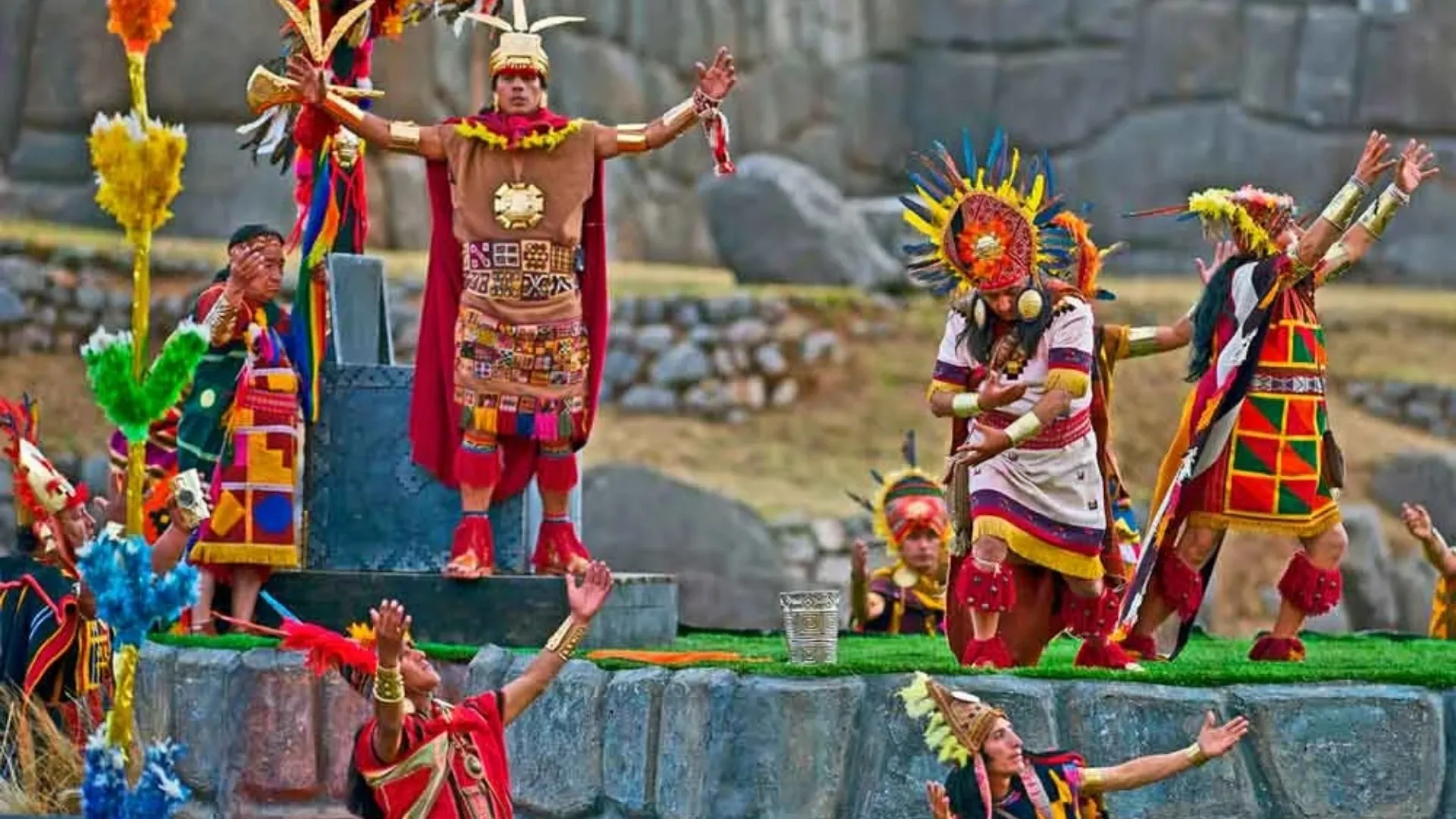
The moment of truth had arrived. The Inca priest raised a golden knife, plunged it into a black llama, cut out its heart, and held it up toward the sun to read the future.
The woman standing next to me almost fainted. “My God, they just killed an animal,” she said, her voice breaking.
Relax. Take a breath. Here comes the biggest secret of modern Inti Raymi: no real animal dies on that stage. And the true story behind that scene is even more fascinating than what you see on TV.
1. The Truth About the Black Llama
Let’s get straight to the point: the sacrifice you see today at Inti Raymi is a theatrical reenactment.
In the modern version of the ceremony, no real llama is killed. Everything is choreographed to recreate one of the most striking rituals of the Inca era.
But in the days of the Tahuantinsuyo, this act was indeed sacred and real. The black llama was seen as a particularly pure animal, and the priests interpreted signs from the sacrificed animal’s body to try to divine the empire’s fate.
For the Incas, it was not an act of senseless cruelty. It was a way to communicate with the divine and seek guidance regarding the harvest, war, and the balance of the world.
2. The Fire That Travels Kilometers
Another scene that goes unnoticed by many people is the lighting of the sacred fire.
The Inca does not light the flame with matches. The symbolic idea behind the ritual is that the fire is born from the sun itself. According to tradition, a polished golden surface concentrated the sun’s rays onto a flammable material until it produced the ceremonial spark.
It is a powerful image: the sun giving life to the fire, which then represents energy, order, and continuity for the entire empire.
Afterward, that fire was carried by the Chaskis to the four corners of the empire, as a way to extend the ritual blessing to all of Tahuantinsuyo.
3. Why They Toast with a Giant Cup
You’ll also see the Inca raising large cups of chicha, the ceremonial drink made from corn.
One seems intended for the ruler, but the other is poured out onto the ground. This is neither an accident nor a decorative part of the show.
That gesture represents a toast to Pachamama. In the Andean worldview, the relationship with the earth is one of reciprocity: the earth provides sustenance, and humans return offerings, respect, and gratitude.
Once you understand that detail, the ceremony ceases to be merely a visual spectacle and becomes a profound message about how the Incas understood life.
4. Don’t Go to Inti Raymi Blindly
Watching this festival without knowing what’s going on is like watching a complex movie without subtitles.
You’ll notice stunning costumes, music, and movement, but you’ll miss half the experience if you don’t understand the meaning behind each scene.
That’s why it’s so worthwhile to go with a guide who can explain the ritual, the historical context, and the symbols as they happen. When someone explains why the black llama appears, what chicha represents, or why fire is so important, everything changes.
Inti Raymi stops being just a pretty parade and becomes a living ceremony.
Conclusion: It All Starts with the Ritual
Inti Raymi is not just a folkloric festival. It is a window into how the Incas understood power, nature, and the relationship between humans and the cosmos.
Don’t just settle for a photo. Understanding the hidden meaning of the ceremony is what truly makes the experience unforgettable.